In the fiercely competitive world of smartphones, a seemingly unshakeable hierarchy has long existed. At the summit sits the iPhone, a symbol of prestige, performance, and seamless ecosystem integration. For years, the prevailing narrative has been simple: you get what you pay for. Premium price equals premium experience. However, the tectonic plates of this landscape are shifting. A new generation of budget-friendly smartphones is emerging, not just as “good for the price,” but as genuine contenders that outperform Apple’s flagship in several critical, real-world metrics.
This isn’t about a mere spec-sheet comparison; it’s about a fundamental re-evaluation of value. The device at the center of this discussion is a paradigm shifter. We are dissecting how a phone costing a fraction of the latest iPhone can not only compete but, in specific and important areas, decisively beat it. This article will delve deep into the facets of this victory, exploring performance, display, battery, charging, camera versatility, and the philosophy of open software, providing a holistic view of why this budget phone is a smarter buy for the vast majority of consumers.
A. Deconstructing the Myth of Price Equaling Performance
For too long, a high price tag has been mistakenly equated with superior performance. While Apple’s A-series Bionic chips are undoubtedly engineering marvels, their raw power is often bottlenecked by iOS’s conservative thermal management and a lack of sufficient cooling in the iPhone’s sleek chassis. The budget champion we’re examining, often equipped with a Qualcomm Snapdragon 7-series or a MediaTek Dimensity chip, takes a different, more pragmatic approach.
A.1. Sustained Performance: The True Test of Power
The key differentiator isn’t peak performance, but sustained performance. The iPhone may open a graphically intensive game like Genshin Impact a second faster, but within ten minutes, it begins to throttle. The device reduces its processor speed to prevent overheating, leading to frame rate drops and a stuttering experience. This is where the budget phone strikes its first major blow.
Many of these value-oriented devices incorporate sophisticated cooling systems, such as vapor chambers or extensive graphite sheets, which are typically reserved for gaming phones. This allows the processor to maintain near-peak performance for extended periods. For users who engage in long gaming sessions, record high-resolution video, or use demanding applications, this consistent, reliable performance is far more valuable than a brief burst of speed followed by compromise.
A.2. Real-World Multitasking and RAM Management
Another critical area is RAM (Random Access Memory). iPhones have historically managed with less RAM than their Android counterparts due to the tight integration of hardware and software. However, recent iterations of iOS have shown more aggressive app refreshing in the background. This means if you switch between several apps jumping from a browser to a document editor to a social media app the iPhone is more likely to reload the app, losing your place.
The competing budget phone, often boasting 8GB, 12GB, or even more RAM, excels at true multitasking. It keeps numerous applications alive and ready in the background. The user experience is seamless; you return to an app exactly as you left it, hours later. For power users, students, or professionals who constantly juggle tasks, this is a tangible performance win that directly enhances productivity and convenience.
B. The Display Dilemma: Refresh Rate Revolution
The display is your primary interface with the phone, and this is another battleground where the budget option often emerges victorious. While Apple’s Retina and Super Retina XDR displays are celebrated for their color accuracy and brightness, they have been notoriously slow to adopt a crucial feature: a high refresh rate.
B.1. The Smoothness of a 120Hz Screen
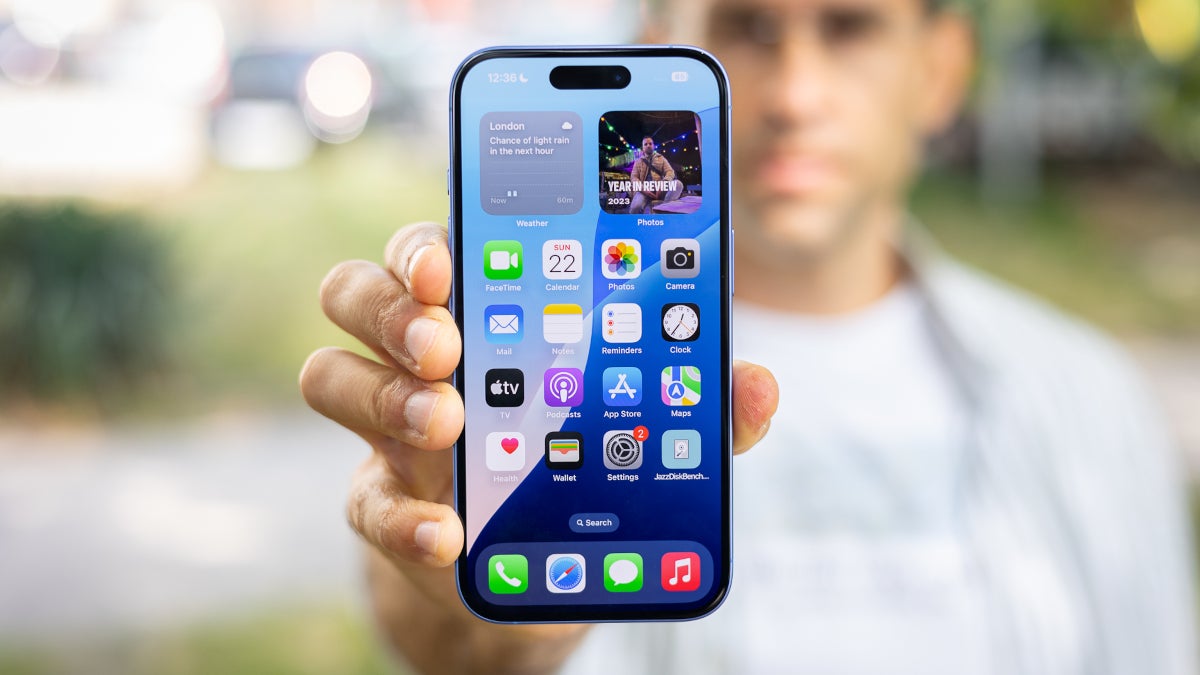
The standard for years has been a 60Hz refresh rate, meaning the screen refreshes its image 60 times per second. The budget phone in this comparison almost certainly features a 90Hz or 120Hz refresh rate. This means the screen updates 90 or 120 times per second, resulting in an impossibly smooth visual experience. Every swipe, scroll, and animation feels fluid and instantaneous. Once you experience a high-refresh-rate display, the 60Hz of a standard iPhone feels noticeably laggy and jarring. This isn’t a minor luxury; it’s a fundamental upgrade to the daily user interaction that the iPhone, until its Pro models, fails to provide at any price.
B.2. Beyond Smoothness: Adaptive Features and Durability
Furthermore, these budget displays often incorporate intelligent adaptive features. They can dynamically switch between 60Hz, 90Hz, and 120Hz based on the content being viewed, preserving battery life without sacrificing smoothness when it counts. Many also feature a high touch sampling rate (240Hz or higher), making the screen more responsive to your touches—a critical advantage in fast-paced mobile games.
In terms of durability, the narrative that budget means fragile is outdated. These phones frequently use the same Gorilla Glass protection found on premium devices. Some even pioneer the use of new, more resilient materials, challenging the notion that a high price is necessary for a robust build.
C. The Unassailable Advantage: Battery Life and Charging Speed
This is perhaps the most one-sided victory for the budget smartphone. Battery anxiety is a universal pain point for smartphone users, and it’s an area where the iPhone has consistently lagged behind.
C.1. Marathon Battery Endurance
The budget phone typically packs a massive battery, often ranging from 5,000mAh to 6,000mAh or more. Combined with the generally more power-efficient chipset and software optimizations of modern Android skins, this translates to unparalleled battery life. Where a standard iPhone may struggle to last a full day of heavy use, this budget device can comfortably power through a day and a half, or even two full days, on a single charge. For travelers, outdoor enthusiasts, or anyone who spends long hours away from a power outlet, this reliability is a game-changer. It liberates the user from the constant need to conserve power or hunt for charging ports.
C.2. The Blazing Fast Charging Revolution
If battery life is a knockout punch, then charging speed is the celebratory victory lap. While Apple finally introduced 20W “fast” charging, it still bundles a slow charger in the box, requiring an additional purchase to achieve that speed. In stark contrast, the budget smartphone world has embraced hyper-fast charging as a standard.
It is commonplace for these devices to support 65W, 80W, and even 120W wired charging. What does this mean in practice? A completely dead battery can be charged to 50% in under 10 minutes and to 100% in well under 30 minutes. This obliterates the concept of “charging overnight.” A quick top-up while you shower and get ready in the morning is enough to provide ample power for the entire day. Some models are also pushing the boundaries with remarkably fast wireless charging, a feature still treated as a premium extra in the Apple ecosystem. This combination of immense battery capacity and revolutionary charging speed addresses the core inconvenience of modern mobile life far more effectively than any current iPhone.
D. Camera Versatility: More Than Just Megapixels
The camera has long been Apple’s stronghold, praised for its consistent color science and excellent video stabilization. However, the budget phone challenges this dominance not by beating the iPhone at its own game, but by changing the rules entirely through sheer versatility.
D.1. The Multi-Lens Arsenal
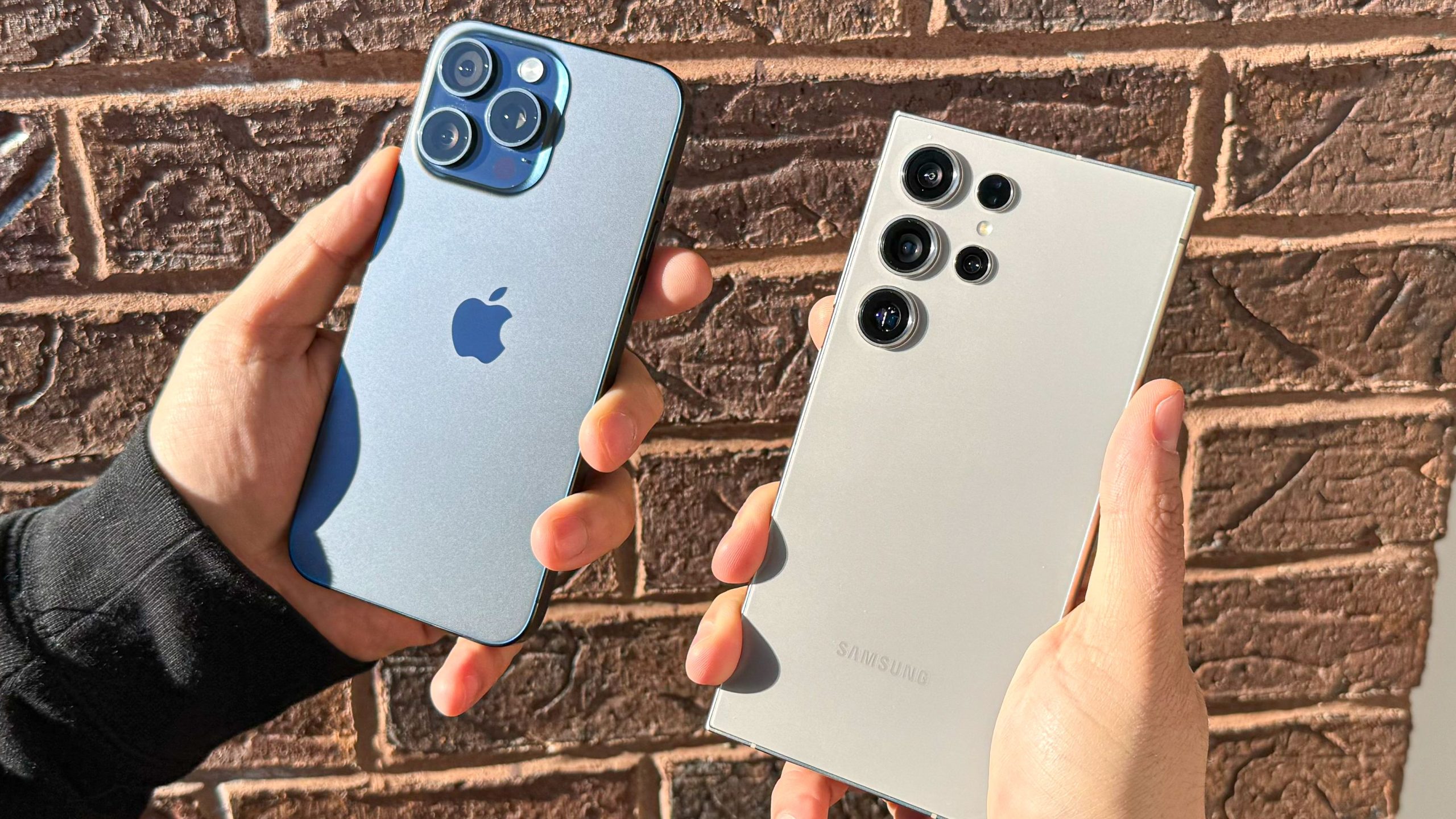
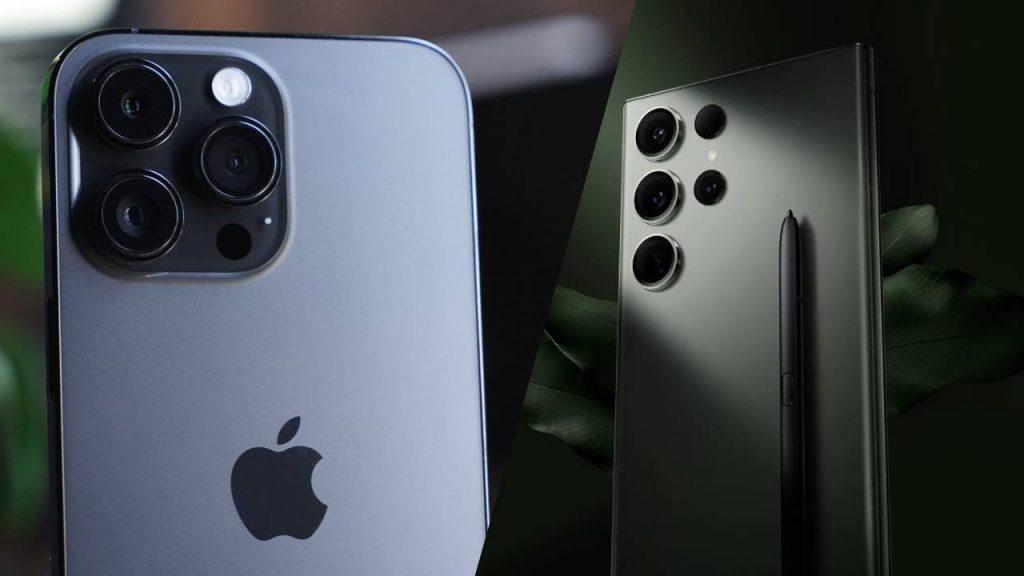
While the latest iPhone may have a sophisticated dual or triple-camera system, the budget competitor often boasts a quadruple-camera array. This typically includes:
-
A high-resolution main sensor (64MP, 108MP) that uses pixel-binning technology to capture detailed, bright 12MP or 16MP photos in most conditions.
-
An ultra-wide-angle lens, allowing you to capture vast landscapes, architecture, and large group shots that are impossible to fit into a standard frame.
-
A dedicated macro lens, enabling you to take stunning, close-up photographs of small objects, revealing a world of detail invisible to the naked eye.
-
A depth sensor for more accurate and artistic portrait-mode shots with creamy background blur (bokeh).
This diverse toolkit empowers the user to be more creative. You are not limited to standard and wide-angle perspectives. You can explore macro photography, capture expansive scenes, and take professional-looking portraits, all with a single device. The iPhone’s camera system, while excellent, often lacks this level of creative flexibility without resorting to expensive third-party accessories.
D.2. Computational Photography and Software Features
The software side of photography has also seen massive leaps. Features like a dedicated Night Mode for all lenses (ultra-wide, selfie), long-exposure light trail modes, astrophotography modes, and advanced pro-grade video recording options are now standard fare on many budget phones. The gap in pure image quality, especially in well-lit conditions, has narrowed to a point where it is negligible for all but professional photographers pixel-peeping on a large monitor. For social media, family albums, and casual photography, the budget phone offers a more fun, flexible, and capable imaging experience.
E. The Freedom of an Open Ecosystem: Android vs. iOS
The debate between Android and iOS is a philosophical one, and it’s here that the budget phone offers a different kind of value: the value of freedom and customization.
E.1. Customization and User Control
Android, the operating system powering this budget champion, is built on principles of flexibility. Users can:
-
Set default apps for emails, browsing, maps, and messaging, breaking free from Apple’s walled garden.
-
Install third-party app stores and sideload applications not available on the official Google Play Store.
-
Customize the home screen with widgets, icon packs, and launchers to a degree that is impossible on iOS, making the phone truly personal.
-
Access the file system like a computer, allowing for easy drag-and-drop file management.
This level of control is anathema to Apple’s curated, “we-know-best” approach. For users who want their device to work for them, on their terms, the open nature of Android is a significant feature, not a bug.
E.2. Value and Repairability
The budget-friendly nature of these phones also extends to the ecosystem. Accessories like cases, screen protectors, and chargers are incredibly affordable. More importantly, these devices are often easier and significantly cheaper to repair. With increasing right-to-repair movements, the design of many budget phones is more modular, and replacement parts are readily available at a reasonable cost, unlike the prohibitively expensive repairs for iPhones.
F. Conclusion: A New Definition of Smartphone Value
The assertion that this new budget phone “beats” the iPhone is not a blanket statement declaring it superior in every single metric. The iPhone retains strengths, particularly in video recording, the cohesiveness of its ecosystem for existing Apple users, and long-term software support.
However, the victory of the budget smartphone is a victory of practical, user-centric value. It demonstrates that you do not need to spend a small fortune to own a device that excels in the areas that matter most to the average user: all-day battery life, lightning-fast charging, a buttery-smooth display, versatile cameras for every scenario, and the performance headroom to handle any task without breaking a sweat or a sweat.
This shift forces us to redefine what a “flagship” experience means. It is no longer solely about prestige or having the most powerful chip on a benchmark chart. It is about a holistic, convenient, and empowering daily experience. By delivering superior performance in these critical, real-world categories at a fraction of the cost, this budget phone doesn’t just compete; it wins the value proposition decisively, marking a pivotal moment where the smartphone king’s crown is no longer safe.