
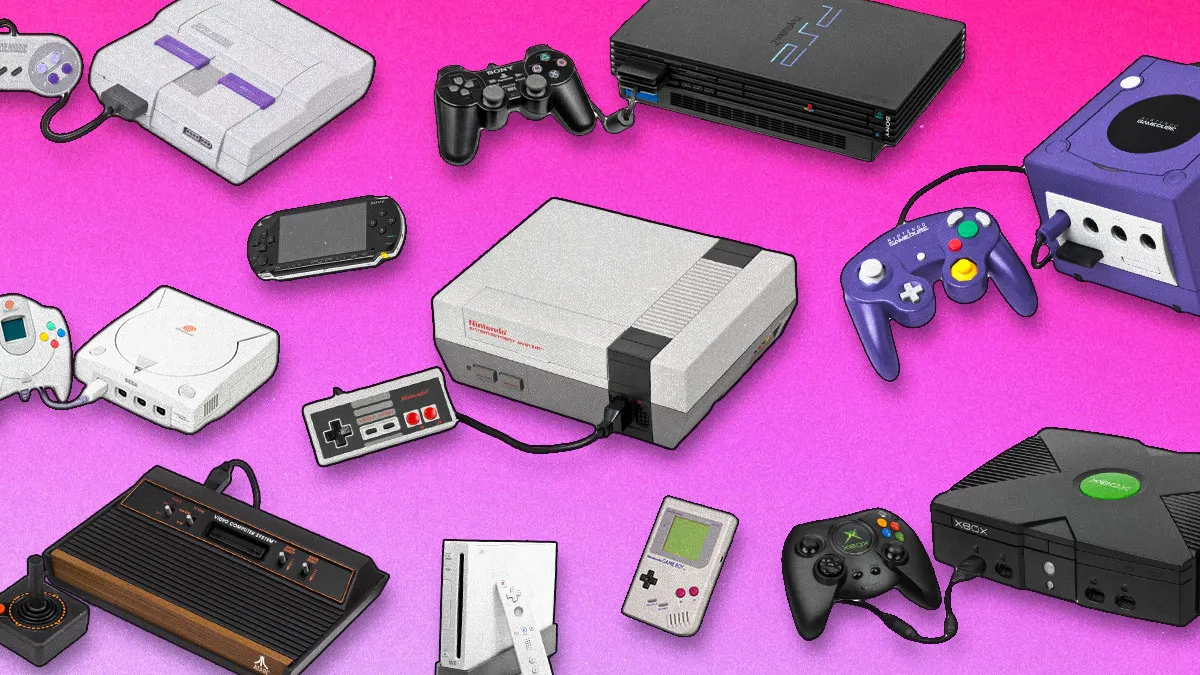
In an era defined by photorealistic graphics, sprawling open worlds, and online multiplayer battles involving millions, a quiet yet powerful revolution is taking place. It’s a return to simpler times, to the chirpy bleeps and bloops of 8-bit soundtracks and the pixelated charm of two-dimensional sprites. The retro gaming console, once relegated to dusty attics and garage sales, has made a triumphant and commercially explosive comeback. This isn’t merely a niche hobby for aging enthusiasts; it’s a full-blown cultural phenomenon that is reshaping the gaming industry, captivating a new generation of players, and proving that great game design is truly timeless.
But why now? What is driving this powerful wave of nostalgia in a market saturated with cutting-edge technology? The answer is a complex and fascinating tapestry woven from threads of nostalgia, smart business strategy, modern convenience, and a universal yearning for straightforward, unadulterated fun. This article will delve deep into the heart of the retro gaming renaissance, exploring its roots, its key players, and its profound impact on the future of interactive entertainment.
A. The Core Drivers: Why We Are Yearning for the Past
The resurgence of retro gaming is not a random occurrence. It is propelled by several powerful, interconnected forces that resonate with a broad audience.
A. The Powerful Pull of Nostalgia and Emotional Connection
For the generations that grew up with the NES, Sega Genesis, and original PlayStation, these consoles are more than just hardware; they are time machines. The sight of a specific game cartridge or the opening notes of a classic theme song can instantly transport an individual back to their childhood living room, evoking powerful feelings of comfort, joy, and simplicity. This emotional connection is a potent force. In a complex and often stressful modern world, revisiting these familiar digital worlds provides a safe and comforting escape. It’s a direct link to a happier, more carefree time, and this emotional resonance is a primary fuel for the retro market.
B. A Reaction to Modern Gaming Complexities
Contemporary blockbuster games are marvels of technology, but they can also be overwhelming. Many require a significant time investment to complete, feature intricate control schemes, and are often delivered as unfinished products requiring massive day-one patches. The “games as a service” model, with its constant updates, battle passes, and microtransactions, can sometimes feel more like a chore than a leisure activity. Retro games, by contrast, offer immediate gratification. They are typically pick-up-and-play experiences with simple, intuitive controls and straightforward objectives. There is a purity to their design that many find refreshingly direct and satisfying.
C. The Genius of Mini and Plug-and-Play Consoles
Companies like Nintendo, Sega, and Sony have masterfully capitalized on this trend by releasing official, miniaturized versions of their classic systems. The NES Classic Edition, released in 2016, was the watershed moment. This perfectly replicated, palm-sized console came pre-loaded with 30 iconic games and instantly sold out, creating a frenzy that proved the immense commercial viability of retro re-releases. It was followed by the SNES Classic, the Sega Genesis Mini, the PlayStation Classic, and many others. These devices eliminate the friction of finding old hardware and cartridges, offering a curated, plug-and-play experience that “just works” on modern high-definition televisions.
D. The Critical Role of Game Preservation and Historical Appreciation
As the video game medium matures, there is a growing recognition of its artistic and historical significance. Younger players, who may not have been alive during the 8-bit or 16-bit eras, are curious about the roots of their favorite hobby. They want to understand where franchises like The Legend of Zelda, Final Fantasy, or Super Mario began. Retro gaming, whether through official mini-consoles, digital storefronts, or emulation, serves as an interactive museum. It allows new audiences to experience and appreciate the foundational titles that established the genres, mechanics, and storytelling techniques we take for granted today.
E. The Allure of Tangible Collectibility
In an increasingly digital world where game purchases are often just licenses in an online account, physical retro games offer a sense of tangible ownership and collection. Hunt for a rare cartridge, admiring the box art, and building a physical library is a rewarding hobby in itself. This collector’s market is thriving, with rare titles like EarthBound for the SNES or Suikoden II for the PlayStation commanding high prices, underscoring the lasting value and desirability of these physical artifacts.

B. The Titans of Retro: A Deep Dive into Iconic Consoles and Their Legacies
The retro revival has brought a pantheon of legendary systems back into the spotlight. Each one represents a different era and philosophy of gaming.
A. The Nintendo Entertainment System (NES) – The Industry Savior
Before the NES, the North American video game market had crashed, and consoles were seen as a fad that had run its course. Nintendo, with its strategic marketing and strict “Seal of Quality,” single-handedly resurrected the industry. The NES library is a treasure trove of foundational classics.
-
Key Titles: Super Mario Bros. 3 (often considered the pinnacle of 2D platforming), The Legend of Zelda (which pioneered the action-adventure genre with its save feature and non-linear exploration), Metroid, Castlevania, and Mega Man 2.
-
Legacy: The NES established Nintendo as a household name and created franchises that remain pillars of gaming to this day. Its design philosophy prioritized tight controls and inventive gameplay over graphical fidelity.
B. The Super Nintendo Entertainment System (SNES) – The 16-Bit King
The 16-bit era was a golden age of refinement, and the SNES is its undisputed champion. While its rival, the Sega Genesis, boasted “blast processing,” the SNES countered with a superior color palette and Mode 7 graphics that allowed for scaling and rotation effects, creating a sense of depth previously unseen.
-
Key Titles: Super Mario World (a launch title that expanded the Mario universe with Yoshi and more fluid mechanics), The Legend of Zelda: A Link to the Past (a masterpiece that defined the template for all subsequent top-down Zeldas), Chrono Trigger (a revolutionary RPG with multiple endings and a timeless story), Super Metroid, and Street Fighter II.
-
Legacy: The SNES is celebrated for having one of the greatest software libraries of all time, particularly in the role-playing game (RPG) genre. It represents a peak in 2D game design that has never been fully surpassed.
C. The Sega Genesis – The Attitude and the Edge
Sega positioned the Genesis as the cooler, edgier alternative to Nintendo’s family-friendly image. Its marketing, famously embodied by the “Sega Scream,” was aggressive and direct. This console was the home of speed and attitude.
-
Key Titles: Sonic the Hedgehog (Sega’s blisteringly fast mascot created to compete directly with Mario), the Streets of Rage series (which featured legendary soundtracks by Yuzo Koshiro), Phantasy Star IV, and Shinobi III.
-
Legacy: The Genesis carved out a vital space in the market by appealing to an older demographic. It fostered a culture of competition that pushed both Sega and Nintendo to innovate rapidly, benefiting all gamers.
D. The Sony PlayStation – The Disc-Based Revolution
The original PlayStation was a paradigm shift. It moved gaming from cartridges to CD-ROMs, enabling massive storage capacity for full-motion video, CD-quality audio, and sprawling 3D worlds. It brought gaming to a mature, mainstream audience.
-
Key Titles: Final Fantasy VII (a cinematic RPG that is arguably the system’s most iconic title), Metal Gear Solid (which perfected the stealth action genre and featured a movie-like narrative), Castlevania: Symphony of the Night (a landmark for the “Metroidvania” genre), Resident Evil, and Tony Hawk’s Pro Skater 2.
-
Legacy: The PlayStation democratized game development and expanded the thematic boundaries of the medium, embracing genres like survival horror and cinematic storytelling. It established Sony as a dominant force in the industry.
E. The Atari 2600 – The Foundational Archetype
While earlier than the 8-bit boom, the Atari 2600 deserves mention as the console that brought gaming into the living room. Its simple joystick and single-button control defined early interactivity. Games like Pac-Man, Space Invaders, and Pitfall! are cultural touchstones. Its recent re-releases, like the Atari VCS, connect modern audiences with the very origins of home console gaming.
C. How to Dive Into the Retro Gaming Universe Today
Interested in joining the retro revolution? You have more options now than ever before, catering to every level of interest and budget.
A. The Official Plug-and-Play Mini Consoles
This is the easiest entry point. These devices are affordable, officially licensed, and require no technical knowledge.
-
Pros: Authentic experience, high-quality emulation, excellent game curation, HDMI output for modern TVs.
-
Cons: Limited, non-expandable game libraries.
B. Modern Console Digital Stores (Virtual Console, Nintendo Switch Online, etc.)
Services like Nintendo Switch Online offer extensive libraries of NES, SNES, and Genesis games as part of a subscription. PlayStation and Xbox stores also sell classic titles from their back catalogs.
-
Pros: Convenient, often includes quality-of-life features like save states and rewind functions.
-
Cons: The catalog is controlled by the platform holder and can be rotated or removed.
C. PC and Mobile Emulation
Emulation software allows you to play retro games on your computer, phone, or dedicated devices like the Anbernic or AYN Odin.
-
Pros: Access to virtually the entire history of gaming, ability to enhance graphics with filters and upscaling, highly customizable.
-
Cons: Legally gray area if you do not own the original game ROMs; can require technical setup.
D. The Original Hardware and Cartridges (The Purist’s Path)
For the ultimate authentic experience, nothing beats the original console connected to a CRT (Cathode Ray Tube) television.
-
Pros: Pure, unadulterated experience as the developers intended; the tactile feel of original controllers.
-
Cons: Can be expensive and time-consuming to collect; old hardware requires maintenance; CRT TVs are bulky.
E. FPGA (Field-Programmable Gate Array) Systems
This is the high-end solution for purists. Devices like the Analogue NT mini or Analogue Pocket use FPGA chips to replicate the original console’s hardware at a circuit-level, providing near-perfect accuracy without emulation.
-
Pros: The most accurate reproduction of the original experience, often with modern outputs like HDMI.
-
Cons: Very expensive and often produced in limited quantities.

D. The Ripple Effect: How Retro Gaming is Shaping the Modern Industry
The influence of retro gaming extends far beyond playing old games. It is actively shaping the design and business models of today’s industry.
A. The Indie Game Renaissance and the “Retro-Aesthetic”
The modern indie game scene is deeply indebted to retro classics. Games like Shovel Knight, Celeste, Stardew Valley, and Undertale deliberately use pixel-art aesthetics and chiptune music not just as a stylistic choice, but as a design philosophy. They prove that compelling stories, tight gameplay, and emotional depth are not dependent on graphical power. These games are spiritual successors to the classics that inspired them, and they have found massive commercial and critical success.
B. Remakes, Remasters, and Reimaginings
Publishers have realized the immense value in their back catalogs. We are seeing a flood of high-quality remakes and remasters that update classic titles for a new audience. Examples like the Final Fantasy VII Remake, the Resident Evil 2 remake, and the Crash Bandicoot N. Sane Trilogy are not just simple ports; they are complete ground-up reconstructions that honor the source material while leveraging modern technology. This trend ensures that legendary stories and characters remain relevant.
C. The “Demake” Phenomenon
Interestingly, the retro influence also works in reverse. The “demake” trend involves recreating modern AAA games in the style of older consoles. Imagine Cyberpunk 2077 as a PS1-era game or Elden Ring as a 16-bit adventure. These projects, often created by fans, are a testament to the enduring appeal and perceived purity of retro design principles.
D. The Booming Market for Accessories and Merchandise
The retro wave has spawned an entire ecosystem of supporting products. Companies like 8BitDo manufacture high-quality wireless controllers that mimic the look and feel of classic pads but work with modern systems. There is also a huge market for replica cartridges, apparel, posters, and other memorabilia, allowing fans to physically express their love for these timeless games.
Conclusion: The Past is Prologue in the World of Gaming
The resurgence of retro gaming is far more than a fleeting trend or a simple case of nostalgia. It is a powerful and enduring movement that highlights the timeless qualities of great game design: fun, challenge, and emotional resonance. It serves as a vital link to our cultural history, a welcoming gateway for new players, and a boundless source of inspiration for modern developers.
In a relentless march towards higher resolution and more complex simulations, retro games remind us of the core essence of play. They are the foundational pillars upon which the entire industry is built. As we look to the future of gaming with cloud streaming, virtual reality, and artificial intelligence, one thing is certain: the classics of yesterday will continue to be celebrated, replayed, and rediscovered. They are not just relics; they are living, breathing testaments to the enduring power of a great idea, perfectly executed. The retro console is back, and it’s clear it never truly left.